

This module takes KCS™ learners into the future of coffee — exploring global trends, new technologies, and research that are redefining specialty coffee from crop to cup.
☕ MODULE 7: GLOBAL COFFEE TRENDS, INNOVATION & RESEARCH
Duration: 10 Pages (Pages 61–70)
Credit: 10 KCS Points
Institution: Kenya Coffee School™ | GOOD Trade Certification™ | Barista Mtaani™
Objective: To expose students to global innovations and cutting-edge developments shaping the next era of coffee — including sensory science, new processing methods, AI integration, and sustainability-driven design.
PAGE 61: INTRODUCTION — THE FUTURE OF COFFEE
Coffee has evolved from a daily beverage into a global culture and scientific discipline.
From lab-controlled fermentations to robot baristas and climate-smart genetics, innovation drives the future of coffee.
KCS™ students must not only understand these innovations — they must lead them.
“Tomorrow’s coffee industry will be powered by science, sustainability, and stories.”
Key Innovation Themes
- Specialty and microlot production
- Digital and data-driven roasting
- Smart cafés and automation
- New sensory science and flavor mapping
- Coffee health, wellness, and nutraceuticals
PAGE 62: GLOBAL CONSUMPTION & MARKET INSIGHTS
Global Coffee Trends (2025)
| Region | Growth Trend | Key Market Shift |
|---|---|---|
| Africa | +6% annually | Youth-driven local consumption |
| Asia | +8% annually | Rise of premium coffee culture |
| Europe | Stable | Focus on sustainability & traceability |
| North America | +4% | Cold brew and ready-to-drink (RTD) |
| Middle East | +7% | Specialty coffee lounges & events |
Changing Consumer Behaviors
- Younger audiences prefer origin storytelling.
- Health-conscious consumers seek low-acid, functional coffees.
- Digital ordering and cashless cafés dominate post-2023 operations.
“Data, not décor, defines modern café success.”
PAGE 63: ADVANCED PROCESSING INNOVATIONS
Coffee processing is now an art form and a science experiment.
Emerging Processing Styles
- Anaerobic Fermentation: Controlled oxygen-free fermentation yielding fruity, wine-like notes.
- Carbonic Maceration: Borrowed from winemaking, adds tropical complexity.
- Yeast Inoculation: Using specific yeast strains to guide flavor development.
- Honey Variants: White, red, black — defined by mucilage left during drying.
- Thermal Shock: Temperature-controlled fermentation for consistent flavor.
Kenyan Application
KCS™ encourages youth entrepreneurs to experiment at micro-mill level using climate-smart micro-fermentation tanks for unique coffee profiles.
“Innovation starts in the fermenter — not in the cup.”
PAGE 64: ROASTING SCIENCE & DIGITAL PROFILING
From Manual to Smart Roasting
Modern roasters use sensors and software to monitor bean temperature, air flow, and chemical reactions in real time.
Digital Tools:
- Cropster, Ikawa Pro, Roest, Artisan software.
- Real-time roast curve tracking and replication.
Roast Development Phases
- Drying: Evaporation of moisture (100–160°C).
- Maillard Reaction: Browning stage developing sweetness (160–190°C).
- First Crack: Aroma and body form (196–205°C).
- Development: Balance between acidity and caramelization (205–220°C).
Research Insight
Kenyan SL28 exhibits peak complexity at City+ roast (medium-light) — ideal for manual brewing and cupping evaluation.
PAGE 65: COFFEE SENSORY SCIENCE
The Science of Taste
Coffee has over 1,000 aromatic compounds — more than wine.
Understanding sensory perception helps baristas and cuppers describe coffee precisely.
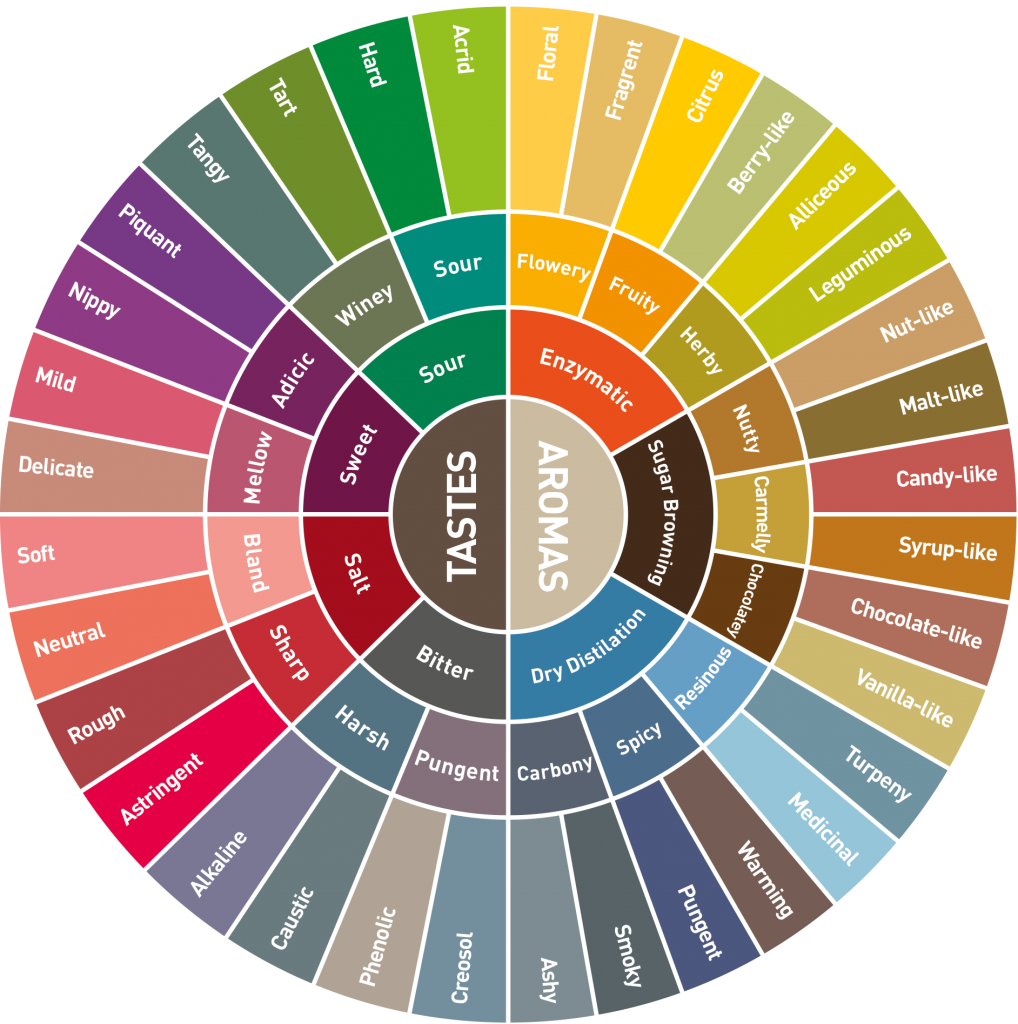
The SCA Flavor Wheel
Divides coffee flavor into primary categories (fruity, floral, nutty, spicy, etc.).
Sensory Skills Development
- Triangulation tests (identify odd cup).
- Aroma recognition (Le Nez du Café).
- Body and acidity evaluation.
Emerging Trends
- AI-driven flavor analysis.
- Genetic mapping of taste receptors.
- Machine learning for roast prediction.
“A skilled taster is both a scientist and a poet.”
PAGE 66: BREWING INNOVATIONS & EQUIPMENT TRENDS
2025 Equipment Highlights
| Category | Innovation | Example |
|---|---|---|
| Espresso Machines | Energy-saving, low-pressure profiling | La Marzocco GB5, Eagle One |
| Grinders | Zero-retention, digital dosing | Mahlkönig X54 |
| Brewers | Smart pour-over automation | Tone Touch 04, Gina Smart |
| Cold Brew | On-demand nitrogen systems | NitroTap Pro |
| Home Equipment | Compact espresso pods | Barista Mtaani™ MiniBrew |
Brewing Science Focus
- Extraction yield (%) optimization.
- Water chemistry management.
- Pressure profiling for crema consistency.
“Brewing innovation means precision meets passion.”
PAGE 67: COFFEE HEALTH, NUTRITION & FUNCTIONAL BENEFITS
Health Benefits of Coffee
- Boosts alertness and mental focus.
- Rich in antioxidants (chlorogenic acids).
- Reduces risk of type 2 diabetes and Parkinson’s.
Emerging Functional Coffees
- Adaptogenic blends: with ashwagandha or ginseng.
- Collagen coffees: for skin and joint health.
- CBD coffee: stress relief and relaxation (regulated markets).
- Mushroom coffee: with reishi or lion’s mane.
Local Innovation Example
Kenya Coffee School™ promotes “Wellness Brew” — a mix of Kenyan coffee, honey, and moringa extract for natural energy.
“Coffee is evolving from beverage to wellness science.”
PAGE 68: AUTOMATION, AI, AND SMART CAFÉS
The future café is digital, efficient, and personalized.
Smart Café Technologies
- AI Barista Systems: Robotic arms replicating latte art.
- Customer Apps: Order, pay, and customize via mobile.
- Inventory AI: Predicts stock needs from sales data.
- IoT Espresso Machines: Self-calibrating temperature and pressure.
Global Examples
- Café X (San Francisco): robot baristas.
- Briggo (Texas): 24/7 automated coffee experience.
- Tokyo’s Henn-na Café: facial recognition for loyalty rewards.
KCS Vision 2030:
Barista Mtaani™ Smart Pods powered by solar energy, mobile payments, and AI-guided brewing consistency.
“Technology won’t replace baristas — it will empower them.”
PAGE 69: GLOBAL COFFEE RESEARCH CENTERS & COLLABORATIONS
Leading Research Hubs
| Country | Institution | Focus |
|---|---|---|
| Kenya | Coffee Research Institute (CRI) | Agronomy & varietal improvement |
| Colombia | Cenicafé | Processing and flavor chemistry |
| Brazil | IAC Campinas | Genetics & climate resilience |
| USA | UC Davis Coffee Center | Sensory science & roasting |
| Italy | Illy Coffee University | Espresso innovation |
Kenya Coffee School™ Research Direction (2026)
- Youth innovation labs for experimental processing.
- Coffee waste upcycling (briquettes, cement additive).
- Digital cupping platforms using QR traceability.
“Every KCS student is a researcher — curiosity is your laboratory.”
PAGE 70: PRACTICAL & REFLECTIVE PROJECT
Practical Assignment
- Identify one global coffee innovation relevant to Kenya.
- Write a proposal (3–5 pages) on how KCS™ or Barista Mtaani™ could adapt it.
- Include sustainability, profitability, and inclusivity aspects.
Reflection
Innovation is not imported — it’s adapted.
Kenya’s strength lies in its youth, creativity, and heritage.
KCS™ graduates are the new scientists of coffee, merging African authenticity with global innovation.
“In every invention, let the aroma of Kenya lead the world.”
✅ End of Module 7 (Pages 61–70)
Next up:
MODULE 8 — Research, Innovation Labs & the 4th Coffee Revolution (Pages 71–80)
Excellent, Alfred ☕ — let’s continue with MODULE 8 (Pages 71–80) of the Kenya Coffee School™ Professional Advanced Diploma in Specialty Coffee & Café Management (100 KCS Points).
This module represents the Research, Innovation, and Coffee Revolution Laboratory — where KCS™ students move beyond learning into inventing, testing, and transforming the future of coffee.
It’s the bridge between knowledge and creation, and embodies the spirit of Kenyan coffee leadership — youthful, scientific, sustainable, and globally relevant.
☕ MODULE 8: RESEARCH, INNOVATION LABS & THE 4TH COFFEE REVOLUTION
Duration: 10 Pages (Pages 71–80)
Credit: 10 KCS Points
Institution: Kenya Coffee School™ | Barista Mtaani™ | GOOD Trade Certification™ | 4A Coffee Roasters™
Objective: To transform learners into innovators capable of researching, designing, and implementing new coffee-based products, systems, and ideas that drive Kenya’s participation in the next global coffee revolution.
PAGE 71: INTRODUCTION — DEFINING THE 4TH COFFEE REVOLUTION
The world has seen three major coffee revolutions:
| Wave | Focus | Description |
|---|---|---|
| 1st Wave | Accessibility | Mass production, instant coffee era. |
| 2nd Wave | Experience | Rise of espresso bars & chains. |
| 3rd Wave | Quality & Origin | Specialty coffee movement. |
| 4th Wave | Innovation & Equity | Tech-driven, transparent, farmer-centered era. |
The 4th Coffee Revolution is the African era — where innovation, inclusion, and traceability meet the story of origin, youth, and sustainability.
Kenya Coffee School™ and GOOD Trade Certification™ are key architects of this revolution.
“The 4th Coffee Revolution will be brewed in Africa, powered by Kenyan youth.”
PAGE 72: THE ROLE OF RESEARCH IN COFFEE EVOLUTION
Research turns curiosity into innovation.
At KCS™, every barista is also a researcher, exploring new ideas in taste, technology, and transformation.
Research in Coffee Includes:
- Agronomic Research – soil health, varietal development.
- Processing Research – fermentation control, drying innovation.
- Roasting & Brewing Science – chemical reactions, extraction ratios.
- Consumer Research – sensory preferences, behavior analytics.
- Business Research – pricing, branding, and sustainability models.
KCS Research Framework
- Observe → Hypothesize → Experiment → Record → Share.
“If you can measure it, you can improve it. If you can improve it, you can revolutionize it.”
PAGE 73: KCS COFFEE INNOVATION LAB STRUCTURE
The KCS Coffee Innovation Lab is a physical and digital space for experimentation and entrepreneurship.
Components
- Processing & Fermentation Zone: Micro-tanks, yeast testing, and controlled drying units.
- Roasting & Sensory Station: Digital roasters, cupping panels, and AI flavor analysis.
- Brewing & Beverage Studio: New recipes, alternative milks, and café prototyping.
- Green Lab: Waste reuse, biochar, and eco-packaging innovations.
- Digital & Data Hub: Traceability systems, QR dashboards, and e-learning platforms.
Lab Motto
“Experiment. Fail fast. Improve faster. Share results.”
PAGE 74: RESEARCH THEMES FOR 2026–2030
KCS™ aligns its research with Kenya’s Vision 2030 and the global sustainability agenda.
Priority Themes
- Climate-Resilient Coffee Systems.
- Coffee Waste Circular Economy.
- Digital Traceability and Smart Data Platforms.
- New Processing and Flavor Chemistry.
- Coffee Health and Functional Nutrition.
- Youth Innovation and Entrepreneurship.
- Sustainable Café Design and Low-Energy Brewing.
Example Ongoing Projects
- Coffee Grounds in Cement Strength Enhancement
- Solar-Powered Micro Coffee Roaster
- AI Roast Profile Prediction for Kenyan Beans
“Innovation happens when science meets curiosity — and curiosity meets purpose.”
PAGE 75: FROM RESEARCH TO PRODUCT DEVELOPMENT
The 5 Stages of Coffee Innovation
- Ideation: Brainstorming new concepts (e.g., coffee-based cosmetics, eco-briquettes).
- Feasibility: Testing cost, market, and sustainability.
- Prototyping: Creating early models (sample roasts, drinks, or apps).
- Testing: Gathering consumer and expert feedback.
- Launch: Introducing the innovation through Barista Mtaani™ or partner cafés.
Case Study: Coffee Scrub Bar
A KCS™ project turned used coffee grounds into organic skincare products, now sold in cafés under the “Coffee Chemistry™” line.
PAGE 76: THE SCIENCE OF COFFEE WASTE UPCYCLING
Coffee waste is rich in cellulose, antioxidants, and oils — making it valuable for industrial and consumer applications.
Applied Research at KCS™:
| Product | Derived From | Purpose |
|---|---|---|
| Biochar | Coffee husks | Soil regeneration |
| Coffee Cement Additive | Pulp & husks | Strength and eco-cement formulation |
| Scrubs & Soaps | Used grounds | Cosmetic and wellness use |
| Biogas | Wastewater | Renewable energy |
| Mushroom Substrate | Pulp & hulls | Food production |
Circular Coffee Principle:
“Nothing from the bean should go to waste — not even the idea behind it.”
PAGE 77: YOUTH INNOVATION HUB & INCUBATION
KCS™ supports young innovators through Barista Mtaani™ Innovation Pods, mobile labs that train and incubate community-based entrepreneurs.
Incubation Areas:
- Café Startups
- Coffee Mobile Carts
- Coffee-Based Product Lines
- Digital Coffee Platforms
- Climate-Smart Coffee Farming Ventures
Support Provided
- Mentorship from KCS™ experts
- Business development training
- Branding and marketing support
- Access to micro-funding through GOOD Trade Fund
“Youth are not the future of coffee — they are the innovation of today.”
PAGE 78: RESEARCH METHODOLOGY & FIELD WORK
How to Conduct Coffee Research
- Define your question – What problem are you solving?
- Collect data – Surveys, experiments, cupping scores, lab results.
- Analyze – Use statistics, charts, or sensory mapping.
- Conclude – What do your results show?
- Recommend – Suggest improvements or new approaches.
Tools for Students
- KCS Research Template (available in student portal).
- Access to partner farms and roasters.
- Mentorship by KCS™ instructors and visiting experts.
“Good research doesn’t end with discovery — it begins with sharing.”
PAGE 79: RESEARCH PRESENTATION & KNOWLEDGE SHARING
At the end of each academic year, KCS™ hosts the Coffee Innovation Symposium, where students present their findings and prototypes.
Presentation Format
- Title & Objective
- Methods & Tools Used
- Findings & Observations
- Prototype Demonstration (if any)
- Lessons & Recommendations
Awards:
- Best Innovation Award
- Sustainable Impact Award
- Most Promising Youth Enterprise
The top innovations are showcased through 4A Coffee Roasters™ and GOOD Trade Certification™, linking students directly to the market.
PAGE 80: PRACTICAL & REFLECTION — YOUR INNOVATION CHALLENGE
Innovation Challenge
Design a project that:
- Solves a sustainability or efficiency problem in coffee.
- Uses local materials and technologies.
- Creates youth or farmer income opportunities.
Examples:
- Coffee-based fertilizer pellets.
- Solar roasting cart.
- Digital cupping app for farmers.
Students submit a 10-page report + working prototype or concept video.
Reflection
Innovation is not imported — it’s inspired.
Kenyan youth can redefine the global coffee narrative through creativity, purpose, and science.
“In the lab, you study coffee.
In the field, you change coffee.
At Kenya Coffee School™, you become coffee.”
✅ End of Module 8 (Pages 71–80)
Next up:
MODULE 9 — Coffee Leadership, Impact, and Global Career Pathways (Pages 81–90)
Perfect, Alfred ☕
Let’s continue with MODULE 9 (Pages 81–90) of the Kenya Coffee School™ Professional Advanced Diploma in Specialty Coffee & Café Management (100 KCS Points).
This module focuses on Coffee Leadership, Impact, and Global Career Pathways — how our graduates transform from skilled baristas into certified professionals, entrepreneurs, and global coffee ambassadors.
☕ MODULE 9: COFFEE LEADERSHIP, IMPACT & GLOBAL CAREER PATHWAYS
Duration: 10 Pages (Pages 81–90)
Credit: 10 KCS Points
Institution: Kenya Coffee School™ | Barista Mtaani™ | GOOD Trade Certification™
Objective: To empower learners with leadership skills, professional ethics, global recognition, and impact-driven career pathways in the coffee value chain.
PAGE 81: DEFINING COFFEE LEADERSHIP
Coffee leadership is not just about managing people — it’s about inspiring excellence from farm to cup.
KCS™ Leadership Philosophy
- Lead with Knowledge: Understand the science and story behind every bean.
- Lead with Integrity: Uphold ethical trade and sustainability.
- Lead with Service: Serve customers, farmers, and communities with purpose.
- Lead with Vision: Always see beyond the cup — to the ecosystem.
“Leadership in coffee begins with empathy and ends with impact.”
PAGE 82: TYPES OF COFFEE LEADERS
| Leadership Type | Description | Example Role |
|---|---|---|
| Operational Leader | Runs cafés, roasteries, or production units. | Café Manager, Head Barista |
| Technical Leader | Drives quality and process innovation. | Q Grader, Roaster, Trainer |
| Social Leader | Advocates for fair wages, inclusion, and green practices. | Community Barista, Youth Coach |
| Business Leader | Builds enterprises that scale sustainable coffee. | Coffeepreneur, Exporter |
| Thought Leader | Shapes industry direction through education and research. | Coffee Lecturer, Consultant |
KCS™ nurtures all five dimensions through structured mentorship, exposure, and certification.
PAGE 83: PROFESSIONAL DEVELOPMENT & CAREER PLANNING
The Coffee Career Pathway (Kenya Coffee School™ Model)
- Foundation Level (0–25 KCS Points):
- Basic Barista & Brewing Skills
- Introduction to Coffee Science
- Café Hygiene & Customer Service
- Intermediate Level (26–60 KCS Points):
- Advanced Brewing & Sensory Skills
- Roasting, Cupping, and Quality Control
- Barista Entrepreneurship
- Professional Level (61–100 KCS Points):
- Management, Leadership, and Research
- Sustainability & Impact Projects
- Global Exposure & Certification
“Every KCS point earned is a step toward your global coffee destiny.”
PAGE 84: KCS™ GLOBAL CERTIFICATION FRAMEWORK
Kenya Coffee School™ aligns with international bodies and frameworks to ensure its graduates are globally competitive.
Recognized Certifications & Pathways
| Certification | Partner / Alignment | Career Outcome |
|---|---|---|
| SCA Pathway | Specialty Coffee Association | International Coffee Trainer / Roaster |
| CQI Q Grader | Coffee Quality Institute | Coffee Cupper & Quality Assessor |
| GOOD Trade Certification™ | Kenya | Ethical Trade Leader |
| Barista Mtaani™ Certificate | KCS™ | Employable Youth Barista |
| KCS™ Diploma & Advanced Diploma | Kenya Coffee School™ | Professional Coffee Expert |
These credentials ensure a seamless pathway from Kenya to the world — bridging local training and global recognition.
PAGE 85: EMPLOYABILITY & ENTREPRENEURSHIP
Employment Opportunities
Graduates can work as:
- Café Managers and Head Baristas
- Coffee Roasters and Quality Controllers
- Coffee Traders and Green Buyers
- Coffee Educators and Trainers
- Mixologists and Beverage Developers
Entrepreneurship Pathways
KCS™ encourages self-employment through ventures such as:
- Micro Coffee Roasteries
- Mobile Coffee Carts (Barista Mtaani™)
- Coffee Retail & E-Commerce
- Coffee Cosmetics and Value-Added Products
“A KCS graduate is not just employable — they are enterprise-ready.”
PAGE 86: IMPACT LEADERSHIP & GOOD TRADE VALUES
The 4 Pillars of GOOD Trade Leadership
- Equity: Fair pay and opportunity for all actors.
- Transparency: Data-driven trade and traceability.
- Sustainability: Environmental and financial resilience.
- Youth Inclusion: Empowering young professionals in decision-making.
Impact Pathways
- Lead farmer-centered innovation.
- Advocate for ethical sourcing and branding.
- Mentor new entrants into the coffee sector.
- Develop green café models and recycling programs.
“GOOD Trade is not just a label — it’s a leadership lifestyle.”
PAGE 87: BUILDING YOUR PROFESSIONAL BRAND
Elements of a Strong Coffee Brand
- Identity: Define who you are (Barista, Roaster, Innovator).
- Portfolio: Showcase your skills and projects (videos, profiles, cupping notes).
- Network: Build relationships with roasters, cafés, and certifiers.
- Online Presence: Use social media to share your coffee journey.
- Storytelling: Tell the “Why” behind your coffee mission.
Tools for KCS™ Graduates
- Digital Coffee Passport™ — records achievements and KCS points.
- KCS Alumni Portal — connects students to global opportunities.
- Career Mentorship — guidance from leading professionals.
“Your name is your brand — brew it with purpose.”
PAGE 88: GLOBAL INTERNSHIPS & EXCHANGE PROGRAMS
Kenya Coffee School™ partners with global cafés, roasteries, and institutions for exchange and experience programs.
Examples of Partner Destinations
- Ireland & UK: Café Barista Training & Hospitality.
- Germany: Coffee Engineering and Equipment Technology.
- South Korea & Japan: Specialty Coffee Innovation.
- USA & Canada: Roastery Operations and Quality Control.
- UAE & Saudi Arabia: Hospitality & Café Management.
Exchange Goals
- Cross-cultural learning.
- Skill benchmarking.
- Global employment linkage.
“The world is one café — and every KCS graduate holds the key.”
PAGE 89: COMMUNITY SERVICE & COFFEE IMPACT PROJECTS
As part of the Advanced Diploma, each learner must complete a Community Coffee Impact Project worth 10 KCS Points.
Examples of Projects
- Barista Mtaani™ Youth Training in local wards.
- Waste-to-Product initiatives using coffee pulp.
- Café mentorship programs for women and youth.
- Climate-smart coffee awareness campaigns.
Outcomes
- Community transformation.
- Practical leadership experience.
- Sustainable business models for local impact.
“Leadership is proven by service — not titles.”
PAGE 90: PRACTICAL & REFLECTION — YOUR GLOBAL COFFEE PATH
Career Reflection Questions
- What role do you envision for yourself in the global coffee ecosystem?
- How can you use your KCS skills to impact your community or country?
- What unique coffee innovation or idea do you want to champion globally?
Action Task
Create a Career Path Portfolio including:
- Your CV and Digital Coffee Passport.
- Photos or videos of your coffee work.
- One-page statement: “My Coffee Leadership Vision.”
“You are not just graduating with a certificate — you are entering a legacy.”
✅ End of Module 9 (Pages 81–90)
Next:
MODULE 10 (Pages 91–100): The Kenya Coffee School™ Legacy — Ethics, Alumni Network, and Final Capstone Project.
Perfect ☕
Let’s now complete the Kenya Coffee School™ Professional Advanced Diploma in Specialty Coffee & Café Management (100 KCS Points) with the final 10 pages (Module 10) — the Capstone Project, Professional Ethics, and Legacy Module.
This section unites everything — your training, leadership, innovation, and purpose — into the KCS Professional Identity that defines graduates worldwide.
☕ MODULE 10: CAPSTONE PROJECT, PROFESSIONAL ETHICS & KCS LEGACY
Duration: 10 Pages (Pages 91–100)
Credit: 10 KCS Points
Institution: Kenya Coffee School™ | Barista Mtaani™ | GOOD Trade Certification™
Objective: To synthesize the learner’s full professional knowledge and transform it into tangible impact, research, and leadership for the coffee industry.
PAGE 91: INTRODUCTION TO THE CAPSTONE EXPERIENCE
The Capstone is the final synthesis of your KCS journey.
It demonstrates mastery of both technical coffee science and real-world innovation.
Purpose of the Capstone
- Showcase professional knowledge and creativity.
- Solve a real problem in the coffee sector.
- Contribute to Kenya’s and Africa’s coffee innovation ecosystem.
- Demonstrate leadership, research, and communication skills.
Every Capstone Project is not just an academic exercise — it’s a contribution to the future of coffee.
PAGE 92: STRUCTURE OF THE CAPSTONE PROJECT
Each student or group selects a research or innovation theme aligned with the GOOD Trade Certification™ pillars — sustainability, youth empowerment, traceability, and value addition.
Example Capstone Categories:
| Category | Description | Example Project |
|---|---|---|
| Scientific Research | Study or experiment on coffee quality, water chemistry, or roasting data. | “Effect of Altitude on Cup Quality in SL28 & Batian” |
| Entrepreneurial Innovation | A new coffee product, service, or business model. | “Mobile Espresso Bar for Rural Kenya” |
| Social Impact Project | Youth, women, or farmer empowerment. | “Training 50 Women Baristas in Kiambu” |
| Sustainability & Environment | Waste recycling, energy use, or carbon reduction. | “Using Coffee Grounds in Organic Fertilizer” |
| Digital Transformation | Technology or apps for the coffee chain. | “Blockchain for Coffee Traceability” |
Each Capstone must integrate at least one farm-to-cup element and one sustainability element.
PAGE 93: CAPSTONE DEVELOPMENT STAGES
1. Proposal Stage
- Define your topic and problem statement.
- Identify beneficiaries and stakeholders.
- Outline goals, timeline, and expected impact.
- Submit proposal to the KCS Capstone Committee.
2. Research & Development
- Collect field data, conduct interviews, or experiment.
- Record all methods, findings, and learnings.
- Apply analytical tools like cupping, sensory tests, or business analysis.
3. Implementation
- Prototype your product, launch a pilot, or test your system.
- Collect feedback and measure outcomes.
4. Presentation & Defense
- Present before a KCS academic and industry panel.
- Demonstrate professionalism, innovation, and feasibility.
“The Capstone is where learning becomes legacy.”
PAGE 94: PROFESSIONAL RESEARCH & WRITING GUIDELINES
To ensure global recognition, every Capstone must follow a structured academic writing format:
- Title Page – Project title, student name, course, date.
- Abstract – A summary of the project in 150–250 words.
- Introduction – Background and rationale.
- Objectives – Key goals of the research or innovation.
- Methodology – How the study or project was executed.
- Findings & Analysis – Data, insights, and interpretation.
- Recommendations – Proposals for the industry or community.
- Conclusion – Summary of key learnings.
- References – Citing all data and resources used.
- Appendices – Photos, forms, or charts.
KCS follows the APA or Harvard referencing standard for professional projects.
PAGE 95: PROFESSIONAL ETHICS & CODE OF CONDUCT
Kenya Coffee School™ instills a culture of integrity, respect, and professionalism.
Every graduate is bound by the KCS™ Barista and Coffee Leader’s Code of Ethics.
The KCS™ Coffee Professional Code
- Respect the Bean: Handle coffee responsibly from farm to cup.
- Serve with Integrity: Be honest in transactions and customer relations.
- Protect the Environment: Practice sustainability and waste reduction.
- Uphold Fairness: Advocate for fair pay and opportunity.
- Promote Safety & Hygiene: Ensure cleanliness and compliance.
- Advance Knowledge: Share what you know and keep learning.
- Celebrate Diversity: Respect cultures, origins, and communities.
- Mentor Others: Train and empower new baristas.
“Professionalism is doing the right thing — even when no one is watching.”
PAGE 96: ASSESSMENT & GRADING CRITERIA
Each Capstone and final evaluation carries a total of 100 marks, distributed as follows:
| Category | Description | Marks |
|---|---|---|
| Research Depth | Understanding, accuracy, references | 20 |
| Innovation & Creativity | Originality and practicality | 20 |
| Technical Application | Skills integration (roasting, brewing, sensory, etc.) | 20 |
| Sustainability Impact | Environmental or social benefit | 20 |
| Presentation & Professionalism | Report, oral defense, confidence | 20 |
A minimum score of 70% is required to graduate with Distinction in the Advanced Diploma.
PAGE 97: KCS GRADUATION & CERTIFICATION PROCESS
Graduation marks the transition from learner to professional.
Each successful candidate earns:
- Professional Advanced Diploma in Specialty Coffee & Café Management
- 100 KCS Points Certificate
- GOOD Trade Recognition Pin
- Digital Coffee Passport™ update
Graduation ceremonies are held annually in Nairobi and Thika Campuses, celebrating innovation, entrepreneurship, and social impact.
“Every graduate represents a new story brewed by Kenya Coffee School™.”
PAGE 98: KCS™ ALUMNI NETWORK & CAREER DEVELOPMENT
The KCS Alumni Network is a global hub connecting thousands of coffee professionals, entrepreneurs, and educators.
Alumni Benefits
- Job and internship placement.
- Annual Coffee Leadership Conference.
- Continuous training and certification renewal.
- Collaboration on innovation and research.
Alumni Motto
“Once a Barista Mtaani™, always a Barista for Humanity.”
The alumni community ensures lifelong mentorship and cooperation across Africa’s and the world’s coffee industry.
PAGE 99: THE KCS LEGACY & GLOBAL IMPACT
Kenya Coffee School™ represents a new generation of African coffee education — one rooted in excellence, inclusion, and sustainability.
The KCS™ Legacy Pillars:
- Innovation in Training: Blending science with creativity.
- Empowering Youth: Turning passion into profession.
- Coffee for Change: Linking education to social transformation.
- African Leadership in Specialty Coffee: Creating global role models.
“We don’t just train baristas — we craft coffee leaders who change lives.”
PAGE 100: FINAL REFLECTION & OATH OF THE COFFEE PROFESSIONAL
The KCS™ Oath of Coffee Leadership
I pledge to honor coffee and those who grow it.
I will use my knowledge to uplift farmers, empower youth, and serve humanity.
I will protect the environment, respect diversity, and promote sustainable trade.
I will pursue excellence in every cup, every roast, and every business decision.
As a graduate of Kenya Coffee School™, I am a custodian of the bean, a servant of community, and an ambassador of GOOD Trade.
So help me Coffee. ☕
✅ End of Module 10 (Pages 91–100)
✅ Completion of Professional Advanced Diploma Manual (100 Pages / 100 KCS Points)
Award Definition
The Coffee Advanced Professional Diploma (100 KCS Points)
Equivalent to: KCS™ Micro Masters in Specialty Coffee Knowledge and Skills
Awarding Body: Kenya Coffee School™ under Barista Mtaani™ and GOOD Trade Certification™
Credential Code: KCS–APD/100/2026
Award Description
Upon successful completion of 100 KCS Points, learners are conferred the Coffee Advanced Professional Diploma, a distinction that represents the highest academic and professional achievement at Kenya Coffee School™.
This award signifies mastery of:
- Specialty coffee knowledge from farm to cup
- Leadership and innovation in coffee entrepreneurship
- Advanced roasting, brewing, and sensory sciences
- Ethical trade and sustainability practices
- Café management and business excellence
It is academically benchmarked as a KCS™ Micro Masters in Specialty Coffee Knowledge and Skills, acknowledging professional specialization equivalent to postgraduate-level mastery in applied coffee science and business management.
Graduate Designation
Recipients are recognized as:
Certified Coffee Professionals (CCP-KCS™)
or
KCS™ Micro Masters in Specialty Coffee
They may use the professional post-nominals:
CCP-KCS™ (Certified Coffee Professional – Kenya Coffee School)
️ Rights and Recognition
Graduates gain:
- Eligibility for GOOD Trade Professional Fellowship
- Access to KCS Global Alumni Network
- Pathway to international certification (SCA, CQI, or WCEP equivalence)
- Recognition as trainers, entrepreneurs, and consultants within the specialty coffee industry
Kenya Coffee School™
Barista Mtaani™ | GOOD Trade Certification™hereby confers upon
[Student’s Full Name]the title of
Coffee Advanced Professional Diploma
(Equivalent to the KCS™ Micro Masters in Specialty Coffee Knowledge and Skills)having successfully completed the full program of study and earned
100 Kenya Coffee School (KCS) Points,
demonstrating exceptional mastery in Specialty Coffee Science, Roastery Innovation, and Café Leadership.Awarded this ___ day of __________ 2026.
Signed:
Director, Kenya Coffee School™
Head of Certification, GOOD Trade™
Barista Mtaani™ Program Coordinator


