


☕ KENYA COFFEE SCHOOL (KCS™)
FOUNDATIONAL DIPLOMA IN BARISTA SKILLS & SPECIALTY COFFEE
Edition 2026 – Barista Mtaani™ Program
Motto: Empowering Africa’s Coffee Future — From Farm to Cup.
Page 1–2: Course Overview
Introduction
The Kenya Coffee School (KCS™) Foundational Diploma in Barista Skills & Specialty Coffee is a comprehensive six- to eight-week training that immerses learners in the full coffee value chain — from the farm, through processing and roasting, to brewing and sensory mastery. The course empowers youth, farmers, and aspiring coffee professionals with the knowledge and skills required to thrive in the global coffee industry.
Course Objectives
- Understand the origin, biology, and cultivation of coffee.
- Master the fundamentals of green coffee processing, roasting, and cupping.
- Acquire professional barista skills for espresso, milk texturing, and brewing.
- Learn value addition, entrepreneurship, and sustainability practices.
- Build career pathways across the local and global specialty coffee sector.
Methodology
Classes combine theory, demonstrations, and practical sessions led by certified trainers. Students gain hands-on experience using commercial espresso machines, grinders, and roasting equipment, as well as participate in field visits to farms, wet mills, and roasteries.
Certification
Graduates earn the Kenya Coffee School Foundational Diploma, accredited under the Barista Mtaani™ program — a recognized stepping stone to international specialty coffee qualifications and employment opportunities worldwide.
Page 3–4: The History and Global Journey of Coffee
Coffee’s story begins in Ethiopia, where legend says a goat herder named Kaldi noticed his goats dancing energetically after eating red cherries from a wild bush. Monks at a nearby monastery used the berries to make a drink that helped them stay awake during prayers — the first brewed coffee.
By the 15th century, coffee spread to Yemen, where it was cultivated and exported from the port of Mocha. In the 16th century, coffeehouses emerged in Mecca, Cairo, and Istanbul, becoming centers of learning and social life. From there, it reached Europe, where the first cafés opened in Venice and London in the 1600s. Coffee became the drink of intellect, replacing wine and ale in the “Age of Enlightenment.”
In Kenya, coffee arrived in 1893, introduced by French missionaries from Reunion Island. The fertile volcanic soils and high altitudes under Mt. Kenya produced coffees of unmatched acidity and fruitiness. Kenya’s legendary SL28 and SL34 varieties have since become world benchmarks for quality.
Today, Kenya Coffee School continues this legacy — teaching a new generation how to sustain excellence from bean to cup.
Page 5: Coffee Botany and Species
Coffee belongs to the genus Coffea and the Rubiaceae family. Of over 120 species, two dominate global trade: Arabica (Coffea arabica) and Robusta (Coffea canephora).
Arabica Coffee grows best at 1,200–2,200 meters, requiring cool temperatures and rich soils. It has lower caffeine content but higher acidity and complexity — producing floral and fruity cups.
Robusta Coffee, grown below 1,000 meters, has stronger body, higher caffeine, and more bitterness. It’s often used in espresso blends for crema and strength.
Kenyan Varieties
| Variety | Origin | Cup Profile | Strength |
|---|---|---|---|
| SL28 | Scott Labs | Blackcurrant, citrus, floral | Drought tolerant |
| SL34 | Scott Labs | Winey, full-bodied | High yield |
| Ruiru 11 | Coffee Research Institute | Balanced, mild acidity | Disease resistant |
| Batian | Released 2010 | Sweet, clean, early maturing | Climate-resilient |
| K7 | Tanzania | Mild, nutty | Resistant to CBD |
Page 6: Coffee Farming Systems
Kenya’s coffee is largely produced by smallholder farmers under cooperative societies. Each farmer owns small plots (0.2–2 acres) but contributes to a national reputation for quality.
Estate farms, on the other hand, are privately owned and manage processing internally.
Factors Affecting Quality
- Altitude: Higher altitudes yield slower maturation, developing complex sugars.
- Soil: Volcanic soils provide minerals essential for acidity and body.
- Rainfall: Well-distributed rains ensure proper cherry development.
- Shade: Protects plants from heat stress and preserves biodiversity.
Sustainability and Youth Inclusion
KCS promotes youth-led coffee agribusiness through Barista Mtaani™ — connecting farming to modern coffee careers. The aim is to make coffee not just a crop, but a culture and livelihood for the next generation.
Page 7–8: Harvesting & Post-Harvest Practices
Harvesting
Selective hand-picking ensures only ripe, red cherries are collected. Mixed harvesting (including unripe or overripe cherries) reduces cup quality and increases defects.
Sorting
Cherries are sorted by density using water floatation: ripe cherries sink; floaters are removed. Proper sorting ensures uniform fermentation and drying.
Pulping and Fermentation
- Pulping: Removes the outer skin.
- Fermentation: Breaks down mucilage, either in water (wet process) or without water (dry fermentation).
- Washing: Cleans the parchment beans.
- Drying: Sun-dried on raised beds to 10–12% moisture.
Storage
Properly dried beans are stored in jute bags in cool, dry conditions to preserve flavor. Poor storage can cause mold or fading.
KCS emphasizes hands-on training in post-harvest practices to ensure every graduate understands how flavor begins at the farm.
Page 9: Green Coffee Fundamentals
Green coffee refers to dried, unroasted beans ready for milling or export.
Key quality parameters include:
- Moisture content: Optimal 10–12%
- Defect count: Low defects improve cupping score
- Bean size: Larger beans (AA) usually command higher prices
Kenya’s auction system at the Nairobi Coffee Exchange classifies coffee by cup quality, size, and region.
Students learn to evaluate green beans by sight, smell, and feel — the foundation of roasting and trading.
Page 10–11: Processing Methods
Wet (Washed) Process
- Most common in Kenya.
- Produces bright, clean cups.
- Requires pulping, fermentation (12–48 hrs), washing, and drying.
Natural (Dry) Process
- Cherries dried whole on raised beds.
- Sweet, fruity flavors, heavier body.
Honey Process
- Some mucilage left during drying.
- Combines sweetness of natural and clarity of washed.
Anaerobic Process
- Fermented in sealed tanks without oxygen.
- Unique tropical or winey notes.
KCS students practice analyzing fermentation profiles and their flavor impact — linking science to sensory outcome.
Page 12: Milling, Grading, and Cupping
Milling Stages
- Hulling: Removes parchment.
- Polishing: Optional — improves appearance.
- Grading: By size, weight, and density.
Kenya’s Coffee Grades
AA, AB, PB (Peaberry), C, E (Elephant), TT, T, and UG.
Each grade influences market price and roasting behavior.
Cupping
Students learn SCA-standard cupping: aroma, flavor, acidity, body, balance, and aftertaste.
Cupping bridges producer and consumer, helping baristas understand coffee origins beyond the espresso machine.
Page 13–16: Roasting and Value Addition
The Roasting Process
Roasting transforms green beans into aromatic brown coffee through heat reactions:
- Drying Phase (100–160°C): Removes moisture.
- Browning Phase (160–190°C): Maillard reaction — aroma development.
- First Crack (195–205°C): Expansion and caramelization.
- Development (210–225°C): Defines roast level.
Roast Profiles
| Level | Cup Profile | Best For |
|---|---|---|
| Light | Floral, fruity, acidic | Filter |
| Medium | Sweet, balanced | All-purpose |
| Dark | Bold, smoky | Espresso |
Students roast, record curves, and taste results — connecting heat control to flavor.
Value Addition
- Roasted coffee packaging and branding.
- Labeling with origin, process, and roast date.
- Creating KCS-branded coffee for sale or café use.
- Exploring micro-roastery business opportunities.
Page 17–24: Barista Skills & Café Operations
Espresso Theory
Espresso is a 25–30 second extraction of concentrated coffee under 9 bars of pressure.
Students learn the 3 pillars: Dose – Yield – Time.
Machine Components
Group head, portafilter, boiler, pressure gauge, and steam wand.
Daily cleaning and calibration are mandatory for flavor consistency.
Milk Science
Milk contains fat, protein, and sugars that form microfoam when steamed correctly.
Students master texture and temperature (60–65°C) for lattes and cappuccinos.
Latte Art
Heart, rosetta, tulip — each pour teaches control, symmetry, and flow.
Art is a visual expression of a barista’s skill and pride.
Brewing Methods
- Pour-over (V60, Chemex)
- French Press
- AeroPress
- Siphon
- Cold Brew
Each method teaches extraction principles: grind, water ratio, temperature, and contact time.
Recipes (15 Classic Drinks)
Espresso, macchiato, cappuccino, latte, flat white, mocha, cortado, Americano, affogato, cold brew, Turkish, iced latte, Irish coffee, café au lait, and signature Kenyan blends like Mt. Kenya Mocha.
Page 25–26: Sensory & Cupping Science
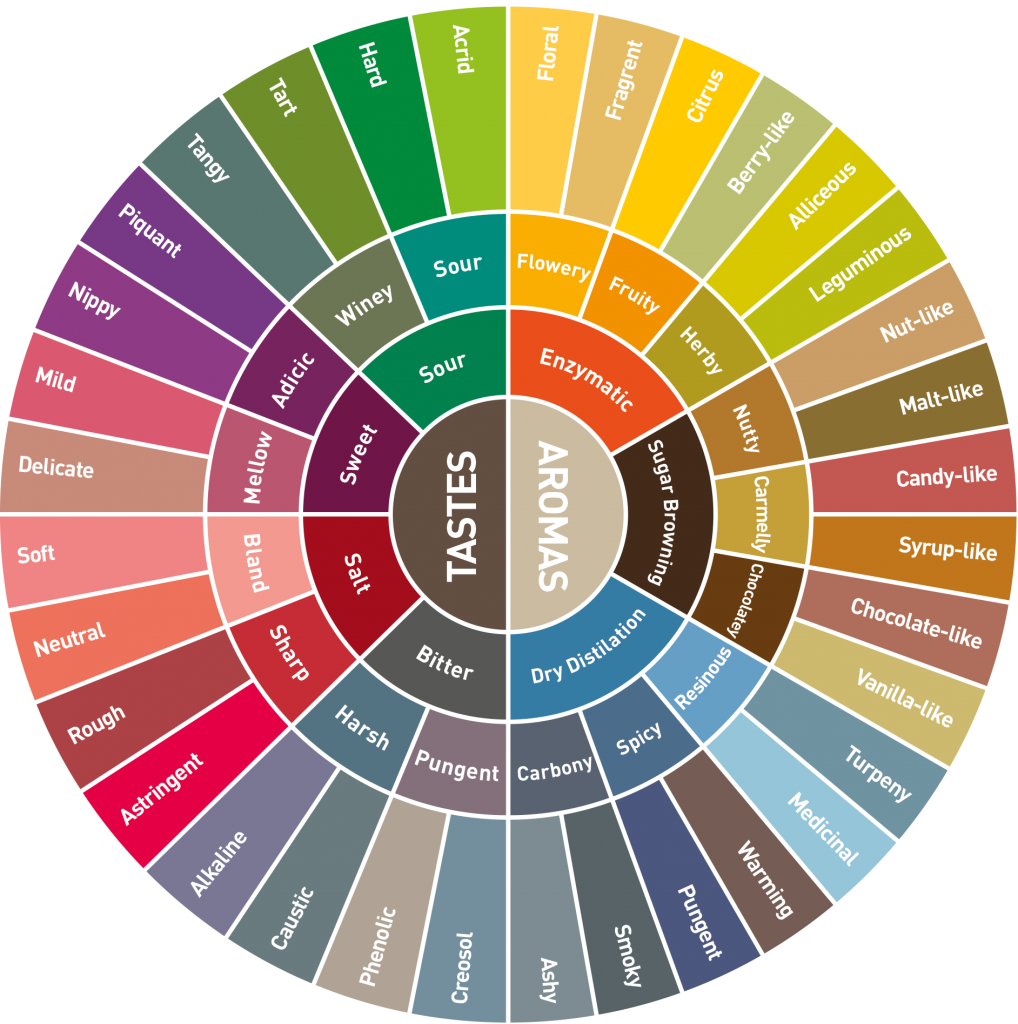
Students develop sensory vocabulary using the Coffee Flavor Wheel.
Exercises include:
- Blind tasting (triangulation)
- Aroma recognition kits
- Comparing SL28 vs Ruiru 11 profiles
Cupping practice teaches objectivity — evaluating acidity, sweetness, and aftertaste.
Graduates learn to communicate flavor professionally, a skill valued globally.
Page 27–28: Entrepreneurship & Career Pathways
Coffee is both a beverage and a business.
Students explore:
- Café setup and costing
- Equipment selection
- Licensing and hygiene compliance
- Branding, menu design, and marketing
Career tracks include:
- Professional Barista
- Roaster / Q Grader
- Café Manager
- Coffee Trainer or Entrepreneur
KCS connects graduates to job placements via Barista Mtaani™ Network, locally and internationally.
Page 29–30: Sustainability, Innovation & Digital Coffee Future
Sustainability
Kenya Coffee School promotes:
- Climate-smart farming and reforestation
- Coffee waste recycling (husk briquettes, compost, cement additive research)
- Women and youth leadership in the coffee sector
Digital Coffee Future
The 2026 program integrates digital traceability, blockchain certification, and AI-based brew profiling.
Students learn to use digital badges and online portfolios to access global opportunities.
Graduation Requirements
- 90% attendance
- Pass all practical and written assessments
- Complete “Farm-to-Cup” project
- Demonstrate professional barista conduct
Graduation Benefits
Internationally recognized Diploma
Digital Certificate + Barista Mtaani™ Badge
Access to internships and coffee entrepreneurship incubators
Eligibility for Advanced Diploma (Roasting & Q Grading)


