



ABCVA™ Panel Calibration Guide: Managing Variance
Panel calibration is a core part of the ABCVA™ protocol to ensure consistency and reliability across cuppers. According to the Kenya Coffee School framework, individual scores should be discussed if they diverge by more than 2 points on any pillar.
Step-by-Step Calibration Process
- Independent Scoring
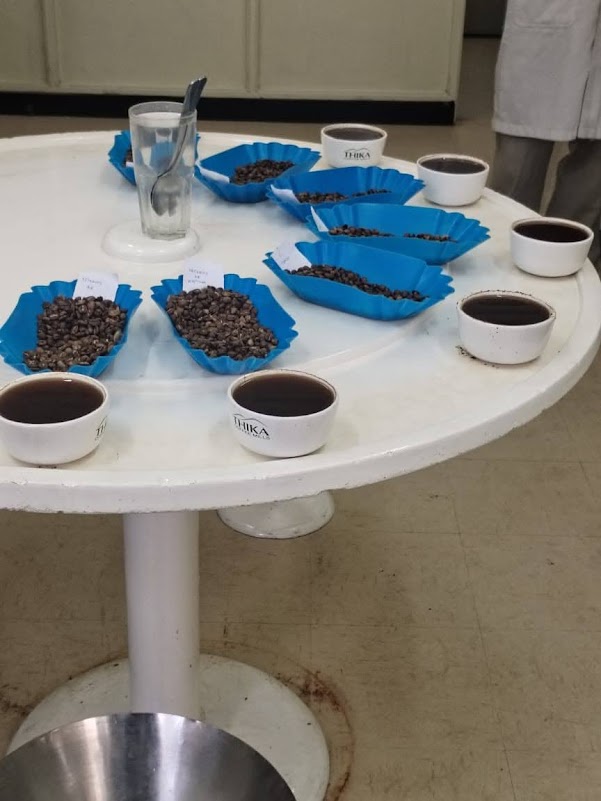
Each panelist cups and scores the samples silently and individually first (no discussion). Use the official score sheet. - Variance Check
Compare scores pillar-by-pillar (and overall).
- Acceptable: ≤2 points difference per pillar.
- Needs Discussion: >2 points on any pillar (Aroma, Balance, Complexity, Vibrancy, Aftertaste) or overall.
- Re-Taste & Discuss
Re-cup the divergent samples together.
- Focus on specific descriptors from the ABCVA™ Wheel.
- Ask targeted questions:
- “Is this acidity bright/citrusy (Vibrancy) or sour/fermented (defect)?”
- “Does the finish linger sweetly (Aftertaste) or fade bitter?”
- “How many distinct flavor layers do you perceive (Complexity)?”
- Align on references (e.g., known good Kenyan AA for vibrancy).
- Finalize Scores
Average the calibrated panel scores for the official result. Document notes on why variance occurred (e.g., experience level, cup temperature).
Common Sources of Variance & Tips
- Experience Level: Novices often undervalue complexity or aftertaste.
- Temperature Timing: Score vibrancy earlier (hotter cup); complexity later (cooler).
- Descriptor Interpretation: Use precise wheel language to reduce subjectivity.
- Defect Sensitivity: One taster may flag a phenolic note that others miss.
- Blind vs. Known: Blind cupping reduces bias but can increase initial variance.
- Panel Size: Minimum 2–3 cuppers; larger panels average out better.
Target: After calibration, panel variance should typically drop below 2 points per pillar for trained cuppers.
Example Calibration Table (for a Panel of 3)
You can use this format during sessions:
| Pillar | Cupper 1 | Cupper 2 | Cupper 3 | Variance | Calibrated Score | Notes |
|---|---|---|---|---|---|---|
| Aroma | 16 | 14 | 15 | 2 | 15 | Wet aroma strength |
| Balance | 17 | 18 | 16 | 2 | 17 | Good harmony |
| Complexity | 13 | 15 | 14 | 2 | 14 | Flavor evolution |
| Vibrancy | 18 | 16 | 17 | 2 | 17 | Bright citric |
| Aftertaste | 15 | 14 | 16 | 2 | 15 | Lingering chocolate |
| Total | 79 | 77 | 78 | 2 | 78 | Specialty Grade |
Tools for Better Calibration
- Reference flights (known good/bad coffees)
- ABCVA™ Wheel for shared descriptors
- Regular training sessions (KCS offers calibration courses)
- Track variance over time to measure panel improvement
#Kenya Coffee School #Barista Mtaani
Here are your requested ABCVA™ resources:
1. Panel Calibration Log Template
Download / Print:
This template includes:
- Session header fields
- Repeatable scoring table (expandable for 4+ cuppers)
- Discussion notes section
- Final calibrated score & grade
2. Example with Sample Scores (for Practice)
Here’s a filled example for Sample Kenya AA (hypothetical panel of 3 cuppers):
| Pillar | Cupper 1 | Cupper 2 | Cupper 3 | Variance | Calibrated | Notes |
|---|---|---|---|---|---|---|
| A · Aroma | 17 | 15 | 16 | 2 | 16 | Strong floral wet break |
| B · Balance | 18 | 17 | 18 | 1 | 18 | Excellent harmony |
| C · Complexity | 15 | 17 | 16 | 2 | 16 | Good evolution on cooling |
| V · Vibrancy | 19 | 17 | 18 | 2 | 18 | Bright phosphoric acidity |
| A · Aftertaste | 16 | 15 | 16 | 1 | 16 | Long sweet chocolate finish |
| TOTAL | 85 | 81 | 84 | 4 | 84 | Exceptional Grade |
Discussion: Minor variance on Aroma & Vibrancy due to one cupper being more sensitive to florals. Agreed on re-taste.


